
The Death of FCAS: an Anatomy of Europe's €100 Billion Defence Scandal
The story of how the Franco-German fighter was killed, how Germany had its replacement ready beforehand, and what it tells us about Europe's sovereignty drive.

👋Hey guys, Julien here. The French Dispatch is a reader-supported publication, and both our coverage of current affairs as well as our ability to bring you more news and information on the world around us is entirely funded by paid subscriptions and donations.
If you enjoy reading articles written by high-level experts, then make sure to support the publication by liking, subscribing, and sharing it with your friends and colleagues, and consider taking a paid subscription.
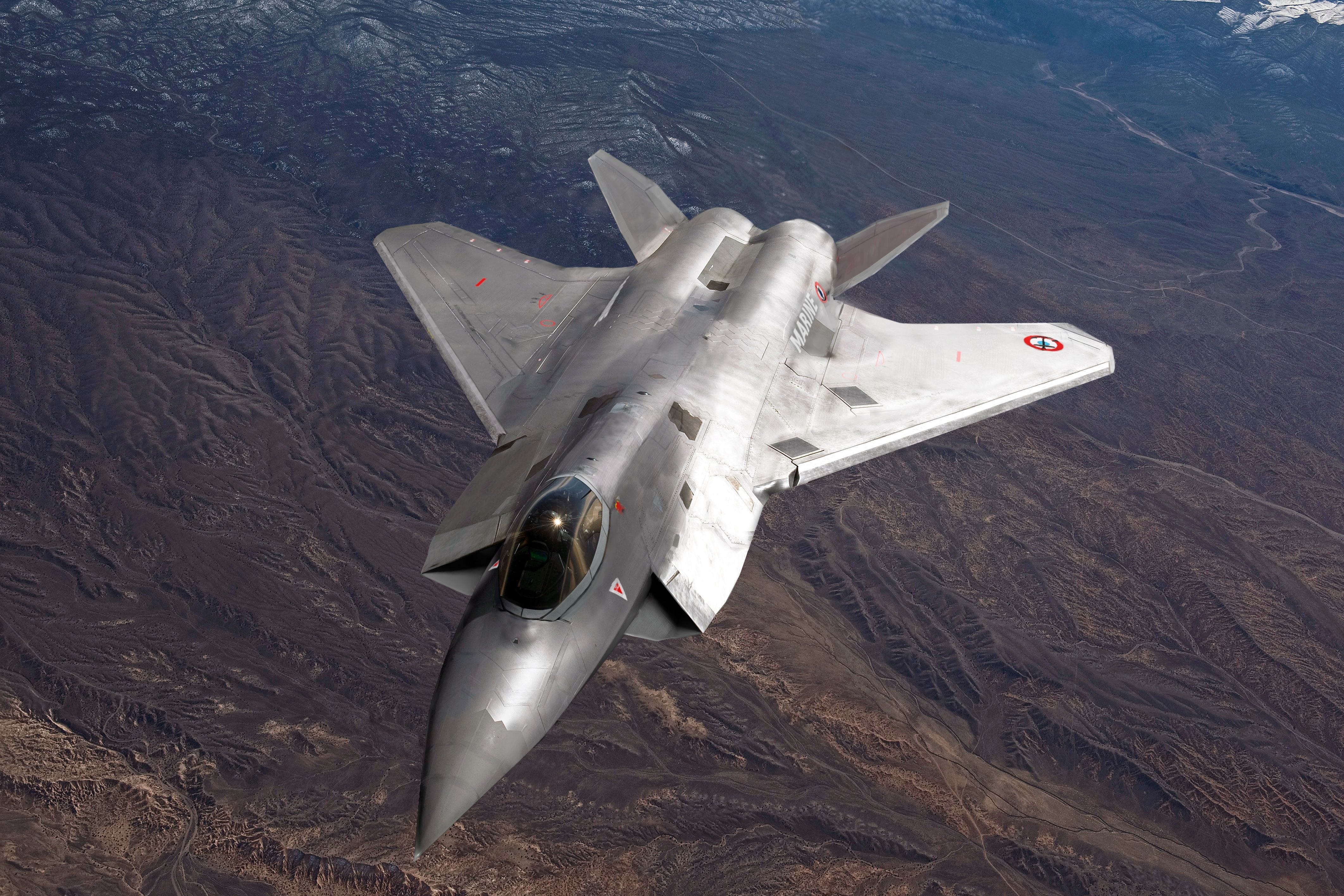
There is a maquette of the FCAS sitting quietly somewhere in Paris. The sleek grey model of a sixth-generation fighter, photographed at the Élysée on a cold January morning in 2023, flanked by Macron and Scholz. Sadly, on 8 June, it became nothing more than a gravestone for European independence.
The German government confirmed that Chancellor Friedrich Merz had recommended to Emmanuel Macron that the two countries abandon the Système de Combat Aérien du Futur (SCAF), known in English as the Future Combat Air System (FCAS). This joint Franco-German-Spanish programme was supposed to replace the Rafale, the Eurofighter, and Spain’s contribution to the Eurofighter fleet by 2040.
At an estimated cost of nearly 100 billion euros, it was the most ambitious industrial cooperation project Europe had ever launched and was seen as the future of European strategic autonomy. Yet, by the end it was treated as an afterthought: Merz conveyed the decision to Macron on June 6 on the sidelines of the EU-Western Balkans summit in Montenegro, the news broke publicly on 8 June, and Merz confirmed it from the podium two days after that at the opening of ILA Berlin, the same air show where the SCAF partnership between Dassault and Airbus was formally unveiled in 2018. The programme ended where it began.
The fighter jet is dead. The “combat cloud” and drone systems will apparently be allowed to stagger on under the SCAF name, in what one European source described to Reuters as a “face-saving solution.” It is a fig leaf, not a programme.
This is not a surprise. It is, however, a verdict. And the more closely you read the months that led to the announcement, the less it looks like a breakdown and the more it looks like a manoeuvre, one that Germany and Airbus had prepared while publicly blaming the French for the wreckage.
What Europe thought it was building
The programme launched in July 2017 was not, strictly speaking, just a fighter jet. It was a ‘system of systems’: a “combat cloud,” a network of interconnected drones, new weapons, unified communications architecture, and at its centre a next-generation manned aircraft called the Next Generation Fighter (NGF).
Rather than Europe’s two main air powers flying into the 2040s in separate national silos, they would field a single integrated combat architecture. European, sovereign, built from within.
2017 was the high point of a certain version of European ambition. Macron had just won the presidency on an explicitly pro-European platform. Merkel was in her final term, still commanding. The Franco-German engine, long stalled, appeared to be firing again. FCAS was its most spectacular output: proof that Europe could sustain the full spectrum of military capability without dependence on Washington. Spain joined in 2019. The budget estimate reached 100 billion euros. Defence ministers posed for photographs. And analysts, almost immediately, began to worry.

They were right to. By the time the programme was cancelled, roughly 3.4 billion euros had already been committed across its first two research phases, around 155 million for Phase 1A in 2020 and 3.2 billion for Phase 1B signed at the end of 2022. Not a single airworthy demonstrator had been built. Nine years and several billion euros bought a software backbone, an engine programme, and a model on a plinth.
So what exactly went wrong?
They were never going to be able to build it together, and both sides knew it early
Dassault Aviation and Airbus were not natural partners. They were, and remain, direct competitors. Dassault makes the Rafale, Airbus makes the Eurofighter. Asking them to jointly design, build, and share intellectual property on a single aircraft was asking two rival carmakers to build one car together, then sell it to their respective national champions.
Dassault, which has built every French combat aircraft since the Liberation, insisted on operational leadership of the NGF. Eric Trappier, the Dassault CEO, was explicit: “to be effective, you need a real leader.” He wanted final authority over the aircraft’s specifications and its supply chain, and he suspected Airbus of wanting to use FCAS as a vehicle for absorbing French combat aviation expertise it did not possess.
The programme’s design architecture, mapped in a 2020 analysis by the Stiftung Wissenschaft und Politik (SWP), the German government’s own foreign policy think tank, shows precisely why that tension was inevitable. FCAS was built around seven pillars: aircraft, engine, remote carrier, cloud solutions, simulation, sensors, and stealth.
Across five of them, Airbus held either the key partner or associate partner role. But on the aircraft pillar, the NGF itself, the programme’s heart and by far its largest budget item, Airbus was merely the associate, under Dassault’s lead.
Germany had been handed principal responsibility for everything surrounding the plane: the drones, the combat cloud, the stealth integration, but France controlled the plane itself.
On paper, a careful division of labour. In practice, a permanent argument about whose contribution was worth more.
Airbus Defence and Space had no independent history of designing or building a combat fighter from scratch. The Eurofighter programme was led by BAE Systems and Alenia. Critics argued the German side wanted access to Dassault’s avionics and flight-control know-how without bringing equivalent expertise to the table.
Naturally, Airbus pushed back. Michael Schoellhorn, head of the Airbus Defence and Space division, told Le Monde that Dassault was trying to impose black boxes and unilateral intellectual property rules that would reduce Airbus to a mere supplier and cut its powerful German aerospace partners out of the programme’s core value.
The SWP analysis, published when the programme was still formally on track, carried a subtitle that now reads as a warning issued too early to be heeded: different perceptions and high complexity threatening the success of the strategic armaments project.
What Schoellhorn’s framing omits is what Airbus was actually asking for, and luckily for us, Aerotime’s reporting from 2021 to 2022 establishes the specific demands: Germany and Airbus required final say over the NGF’s flight controls, cockpit, and stealth capability, systems at the technical core of the aircraft and assigned to Dassault as prime contractor.
They pushed for IP rights to be shared within the NGF pillar so that each partner could use the jointly developed technology in future national programmes. Germany’s own Luftwaffe chief of staff, Ingo Gerhartz, made the intent explicit: “It should be possible to hand intellectual property rights from one branch of industry to the other so that all partners can make their own developments in the future.”
Trappier’s response was direct: “If I give my background today and the program is cancelled in two years, how would I be protected from the competition?” This was not a paranoid reading of Airbus’s intentions. It was an accurate one.
Fact check #1: Who was really asking for what on IP?
Airbus characterised Dassault’s position as demanding “black boxes,” and refused to share technology with its partner. The sourcing tells a more specific story.
According to Aerotime’s reporting from 2021 to 2022, it was Airbus and Germany that demanded final say over the NGF’s flight controls, cockpit, and stealth capability, and pushed for IP rights to flow freely between partners so each could use jointly developed technology in future national programmes.
Germany’s Luftwaffe chief of staff, Ingo Gerhartz, confirmed the intent on record: “It should be possible to hand intellectual property rights from one branch of industry to the other so that all partners can make their own developments in the future.”
Trappier’s response was clear: “If I give my background today and the program is cancelled in two years, how would I be protected from the competition?” This was a direct answer to a stated German position, not a pre-emptive refusal to cooperate.
The governance asymmetry that enabled the IP dispute had a specific cause: Spain. Trappier told the French Senate’s defence committee in March 2021 that Spain’s accession had fundamentally changed the programme’s leadership structure. When FCAS launched in 2017 as a bilateral project, France led. When Spain joined in 2019 through Airbus Defence and Space, Airbus came to represent a larger portion of the conglomerate that the three partner nations formed in the programme.
Trappier acknowledged the consequence directly in his March 2026 earnings briefing: Dassault accepted a shift to a one-third share of the work when Spain joined.
Flight Global reported in June 2022 that, in cases of disagreement, matters were sent to all three procurement agencies, and Airbus, representing two of them, held a structural majority weight against Dassault, which represented one. Trappier’s “co-co-co” complaint was not mere vanity. It described a real governance problem: a prime contractor that could be outvoted by its own associate partner.
The wrong aircraft for the wrong war
The industrial dispute was corrosive enough on its own. Underneath it ran a more fundamental problem that neither government wanted to name.
In a February 2026 interview, Merz finally said what nobody in polite diplomatic circles had wanted to say: “The French need, in the next generation of fighter jets, an aircraft capable of carrying nuclear weapons and operating from an aircraft carrier. That’s not what we currently need in the German military.” France’s requirements were always specific.
The NGF had to be carrier-capable, for the future nuclear-powered France Libre, formally named and approved for construction in early 2026, and able to carry the French nuclear deterrent. Germany had bought 35 F-35As to serve as its dual-capable aircraft (DCA), the NATO term for a conventional fighter certified to deliver American B61 nuclear bombs under the alliance’s nuclear-sharing arrangement. That is a fundamentally different requirement from France’s.
Germany needed a land-based jet to carry someone else’s weapons under American authorisation; France needed a carrier-borne aircraft to carry its own. The two countries were, in a basic sense, designing different aircraft with different jobs, and they probably always knew it.
When Merz finally acknowledged this publicly, Belgian defence minister Theo Francken said what everyone was thinking, posting on X: “SCAF is dead. There will be no Franco-German sixth-generation fighter jet.”
Fact check #2: Did Dassault demand 80% of FCAS?
German media reported in July 2025, citing the defence publication Hartpunkt, that France was seeking 80% of the programme’s workshare. The claim spread rapidly through German political and industrial circles, with Bundestag officials warning against “financing a French project with German funds.” Dassault’s CEO Éric Trappier denied it directly at the Paris Air Show: “We are not seeking 80% of the work. That is not at all what Dassault wants.”
Meta-Defense reported the figure was “neither a political demand nor a unilateral French position.”
The figure appears to have originated from a statement of capability, Trappier acknowledging in response to a direct question that Dassault could handle 80% of the work alone if required, which was repackaged by German sources as a formal demand.
No document or signed negotiating position containing the 80% figure has been produced.
The long goodbye
What followed was a prolonged diplomatic hospice, not a recovery effort.
Phase 2 of the programme, which would have moved the project from paper to metal via physical demonstrators, was due to be signed off by the end of 2025. It was not. The German chancellery confirmed in January 2026 that the decision had been postponed again. Without demonstrators, the cost and risk of every subsequent validation step increases. The programme was becoming progressively more expensive to continue and progressively less credible to back.
Macron launched a mediation effort in March, accepted by Merz, with a deadline of late April. The mediation collapsed on April 18. The German mediator concluded that a jointly built crewed fighter was no longer feasible. France’s defence minister, Catherine Vautrin, reported that mediators were requesting a ten-day extension.
Even that produced nothing.
By April 22, Trappier formally announced that negotiations with Airbus Defence and Space over the NGF were finished. He had warned earlier that month that only “two to three weeks” remained to save the programme. According to Handelsblatt, Merz personally attempted in those final weeks to persuade Trappier to accept an equal partnership with Airbus. That effort also failed.
Paul Taylor, senior visiting fellow at the European Policy Centre in Brussels, told Breaking Defense in February that the programme had been finished for a year or two already: “It’s been clear for a year or two that FCAS is dead, it just won’t lie down, because it’s a political project.” What was unfolding, he said, was “a very slow motion strip tease,” each stage of admission prolonged to avoid the political cost of a clean announcement.
The political cost arrived at ILA Berlin on June 10. Merz, speaking at the same venue where the programme had been launched eight years earlier, said cancelling FCAS “clears a long-standing obstacle” and “opens up new opportunities for the industry to make further progress in the development of modern fighter aircraft by exploring alternative approaches.”
Translation: watch what Berlin does next.
The cast of interests
To understand why FCAS died, follow the incentives rather than the press releases. Once you do, the collapse stops looking like a tragic failure of European will and starts looking like the rational outcome of three governments and two companies each pursuing what suited them.
Élie Tenenbaum, director of the security studies centre at IFRI, put the underlying asymmetry plainly: “While French manufacturer Dassault has the industrial know-how to build the plane, France does not have the resources to pay for it. Germany has the money and can work with others to plug the holes in industrial competency.” Neither side had an interest in a compromise that the other could accept.
Dassault’s exposure to failure was limited, and that shaped everything. If the NGF fell apart, Paris would eventually need a new combat aircraft. There is only one firm in France capable of building it. Dassault would receive the contract on its own terms. The Rafale’s export record helped: Egypt, Qatar, India, Greece, Croatia, the UAE, and Indonesia.
It was no longer the isolated manufacturer of the 2000s struggling to sell against the F-16. Trappier had even suggested a nationally developed successor could cost under 50 billion euros, roughly half the FCAS estimate. That path is now confirmed: Dassault will develop France’s next fighter alone, on a funded Rafale F5 baseline, with nuclear certification and carrier compatibility non-negotiable. Trappier told the Senate on 1 July that he expects the F5 development contract before the end of the year, and he left the door open to partners outside the old consortium. Analysts have pointed to Saab.
Run that figure properly, though, and it is not the bargain it sounds. France was carrying about a third of FCAS, call it thirty-three billion euros. A sovereign successor at fifty billion is carried by France and nobody else. Paris ends up paying roughly half as much again, for an aircraft with no partners, no shared production run, and no one to split the export market with. Dassault takes all of the work instead of a third of it. France pays more and gets less. The firm wins and the country loses.
Nor is it a costless victory for Dassault. It now depends on a French state finding fifty billion euros on its own, in the political weather of 2027, for a programme three countries were supposed to fund between them. Tenenbaum’s warning cuts both ways.
None of which makes Dassault the author of this. Trappier defended a contract that had named him prime contractor, and he gave ground where he could, accepting a cut to a third of the work when Spain joined. He sits as a subcontractor to Airbus on the Eurodrone and has said plainly that it does not trouble him. Refusing to be demoted out of a role the contract had already granted him is not obstruction. Preparing your replacement while the mediators are still in the room is something else entirely.
The 2027 election hung over all of this, though not in the way Berlin found it convenient to suggest. Trappier reportedly noted that after the election Macron would no longer be there to defend the programme, a clear warning to everyone involved. Macron was a strong supporter of the F5, fought for FCAS, and launched the mediation himself. He is the most dependable backer of French combat aviation and European strategic autonomy to date, and potentially ever will be.
What follows him is a wrecked fiscal position on one side and open hostility to arms exports on the other, and the export book is the thing keeping Dassault solvent. Bardella and Mélenchon both sided with Dassault in the industrial dispute. Neither would be the slightest use to it in office.
Germany’s calculus was equally rational. Berlin had the F-35 for its nuclear mission. None of the alternatives it might pursue, GCAP, a Saab partnership, or extending the shelf-life of the Eurofighter, required managing the relationship with Dassault. The incentive to keep FCAS alive was, for Berlin, weaker than the incentive to walk.
There is an incoherence in this that Berlin has not bothered to resolve. Merz has contemplated asking France for nuclear cover for Germany as Washington’s commitment wavers. He then helped kill the one programme that would have given Germany a stake in the aircraft carrying that deterrent. France’s own capability was never in danger.
The F5 is funded and nuclear-certified, and Dassault will build it with or without Berlin. What died was the possibility of a nuclear-capable European platform that Germany part-owned and helped to build.
Merz wants free shelter under the force de frappe, and does not want to help build it. Plus, because he walked Germany out of the programme, France is driven back onto a purely sovereign path, one that serves Paris and does little for European deterrence.
That is not a French choice. It is a German one.
Then, when you look at the manner of the walking, this stops looking like a failure and starts looking like a plan.
The 48-hour consortium
FCAS was formally cancelled on June 8. On June 10, two days later, Schoellhorn stood at ILA Berlin and told the world: “We are ready to assume responsibility.” He added that Airbus had “the expertise, the technologies, the capacity and the clear determination” to build the sixth-generation fighter.
On June 11, eight German companies signed a strategic positioning paper formally launching a new consortium, Team Gen 6, with five Spanish firms closely integrated alongside them. The position paper had already been submitted to Merz’s office and to Defence Minister Boris Pistorius, calling for contracts to be awarded in full by the second half of 2026. Airbus had even released a concept video of the notional aircraft.
You do not produce a branded consortium, an eight-company partner list with five more firms integrated alongside it, a position paper submitted to two government ministries, and a concept video in 48 hours. Team Gen 6 was ready before FCAS was cancelled. Which raises an obvious question about how hard Airbus was really trying to save it.
Fact check #3: Was Team Gen 6 assembled after FCAS was cancelled?
FCAS was formally cancelled on June 8, 2026. Team Gen 6 was publicly launched on June 11, three days later, with eight German partner companies and five Spanish firms integrated alongside them, a branded consortium name, a concept video, and a strategic position paper already submitted to Chancellor Merz’s office and Defence Minister Pistorius, calling for full contracts by the second half of 2026.
Airbus CEO Michael Schoellhorn announced at ILA Berlin on June 10 that Airbus was “ready to assume responsibility” and had “the expertise, the technologies, the capacity and the clear determination” to lead the programme.
A position paper, a concept video, government submissions, and a thirteen-firm German-Spanish partner list are not assembled in a mere 72 hours.
Team Gen 6 was prepared long before FCAS was cancelled.
The answer to how it was prepared had been visible for months. On February 9, 2026, while the Franco-German mediation was still nominally underway, a guest column appeared in Handelsblatt under the headline “Pardon Dassault, aber so geht es gar nicht,” excuse me, Dassault, but this simply won’t do.
The authors were Marie-Christine von Hahn, CEO of the BDLI, Germany’s aerospace industry association, and Jürgen Kerner, deputy chief of IG Metall. The piece accused Dassault of claiming “de facto exclusive control” of FCAS for close to a year, called this demand “an invitation to relinquish our industrial independence,” and proposed the two-aircraft solution as the obvious path forward. It called for politicians to “commit to two aircraft within FCAS.”
It read as a pressure campaign by German civil society on an obstructive French partner. In substance, it was. But the BDLI is not an independent civil society body. Its president is Michael Schoellhorn, the head of Airbus Defence and Space, the same man who spent months publicly feuding with Dassault over black boxes and IP rules, and the same man who announced Team Gen 6 at ILA Berlin four months later.
The chief of the German aerospace lobby and the chief of the German FCAS industrial partner are the same person. The Handelsblatt column is not external pressure on the programme. It is a coordinated communications move by one of the programme’s two industrial principals, using the country’s most influential business newspaper and the country’s largest trade union as amplifiers, to establish the narrative that Dassault alone was responsible for the impasse and to prepare the political ground for an exit that was already being planned.
Germany’s national aviation strategy, adopted by the cabinet on June 10, the same day Merz toured ILA and Schoellhorn declared himself ready, formally asserts that Airbus must co-lead any future German combat aircraft programme. Institutional lock-in and industrial positioning arrived together.
Nowhere better to go
If FCAS is gone, what replaces it? Every option on the table, from a national point of view or the perspectives of European strategic autonomy and European federalism, is a huge step backwards.
But the GCAP option deserves more scrutiny than it usually receives. The Global Combat Air Programme, led by the UK, Italy, and Japan, is frequently described as further along and better organised than FCAS, with an operational target of 2035. It was also announced in 2022, five years after FCAS, and, from the outset, was a duplication of the Franco-German-Spanish effort rather than a complement to it. Leonardo CEO Lorenzo Mariani said exactly that at ILA Berlin on June 10: “Europe cannot have too many sixth-generation fighters under development, this is neither affordable nor helps Europe’s competitiveness.”
That was Mariani’s response to the suggestion that Germany might now join GCAP. Germany would be welcome in terms of capabilities and cost-sharing, he said, but “One also has to be mindful about the target date of 2035 for having the jet flying.”
Any new entrant will join a programme with an established workshare agreement that existing partners will not want to reduce. Germany’s industrial share in GCAP, if it joins at all, will be a fraction of what it held in FCAS. The real lesson Berlin appears to draw, that the problem was working with France and Dassault specifically, rather than joint development in principle, is visible in how quickly Germany moved to codify an alternative.
It is a self-serving lesson. Italy has already signalled that a new partner would push back the delivery date, and Japan is reportedly nervous about the 2035 deadline slipping even without one.
There is a hard point here that neither Berlin nor Paris has acknowledged. GCAP works for one reason: its three partners agreed in 2022 on an equal-partnership industrial model, the Edgewing joint venture, with each holding a 33.3% stake and no single partner claiming unilateral lead authority.
That is the arrangement Airbus spent four years demanding in FCAS. The difference is timing, and the difference is everything. GCAP’s partners settled it at the outset, before anyone held a lead to defend. Airbus was trying to impose it on a programme that had already made Dassault prime contractor, four years and three billion euros in.
When you look at it for what it is, this is clearly a renegotiation under duress dressed as a governance model, and Dassault was entitled to refuse it. Refusing is not obstruction. It is what the contract was for. The lesson is not that joint development cannot work, because GCAP and the Eurofighter programmes were clear proof that it can.
The lesson is that governance has to be settled before the money moves, because afterwards there is no honest way to change it, no arbitrator with the power to fix it, and no way to prevent bad actors from behaving like bad actors.
There is also the question of whether GCAP’s lead partner can deliver. UK Defence Secretary John Healey resigned on June 11, accusing Prime Minister Keir Starmer of producing a Defence Investment Plan that “falls well short of what is required.” Starmer himself announced his resignation eleven days later, on 22 June, leaving the programme’s lead nation without a settled government as it asks partners to commit for the next decade.
The UK had already signed only a three-month stopgap GCAP contract in May, and Italy’s defence minister, Guido Crosetto, publicly sympathised with Healey, noting that he was fighting his own spending battle. Britain is committed to AUKUS submarine construction and GCAP fighter development simultaneously, in an economy that has not grown its defence budget at the pace either programme requires.
The three-partner programme that is supposed to absorb Germany’s ambitions is under financial strain, and that was before any German accession added another layer of workshare negotiation to an already pressurised timeline.
The other options are no better. Germany deepening its reliance on F-35s means a deeper reliance on American weapons, American supply chains, and American political permission to conduct nuclear deterrence missions, at the precise moment when that permission is most visibly in doubt.
France developing a national Rafale successor alone produces a fragmented European air combat landscape with no shared platform, no shared deterrence logic, and no pooled industrial capacity. An extended Eurofighter life for Germany is a deferral, not a strategy.
A pattern, not an accident
FCAS did not fail in isolation. It failed in company.
The Main Ground Combat System (MGCS), the Franco-German initiative to replace the Leclerc and Leopard 2 tanks, launched in the same year on the same bilateral logic, is in comparable difficulty, mired in disputes between Nexter and Rheinmetall over the same governance and workshare questions.
The fear, expressed explicitly by KNDS (the Nexter-KMW joint venture), is contagion: that the FCAS collapse will accelerate the MGCS collapse, producing a domino effect across the entire architecture of Franco-German defence cooperation.
It is worse than contagion. On 1 July, weeks after FCAS died, Trappier told the French Senate that Airbus had tried to force Dassault out of the Eurodrone, the four-nation surveillance drone programme in which Airbus is the German-led prime and Dassault the junior partner.
His account, confirmed by Reuters, was blunt: “Airbus told us to get out. We don’t agree, and so we are in discussions on why we are excluded. I can’t tell you any more about where the programme is because relations are broken at a programme level.”
The roles are the mirror image of FCAS. On the fighter, Dassault was the prime and supposedly pushed the Germans towards the exit. On the drone, Airbus is the prime, and Dassault says it is being shown the door. The same two companies, the same fight over workshare and leadership, playing out on a second programme within a month of the first one collapsing.
The cause is less lurid than the language. France cut its own Eurodrone orders in the 2024-2030 Military Programming Law, and under European contracting rules workshare follows orders, so Dassault’s share shrank automatically. Dassault is now seeking compensation from Airbus for the loss. Nobody had to act in bad faith for the partnership to break. And note what follows from that. The Eurodrone rift did not spread from FCAS. It arose on its own, in a different programme, from an entirely separate cause, weeks apart. Two flagship partnerships breaking from different causes, weeks apart, is not contagion. It is the same flaw surfacing twice, and the second time it did not even need a villain.
This is what tells you the problem is not personal or even national. It is the model itself, which hands rival champions a shared programme and no way to settle who leads.
Which raises the obvious objection to everything set out above. If the model breaks partnerships on its own, why dwell on Team Gen 6 and the Handelsblatt column? Because the model does not merely break partnerships. It rewards the partner who breaks them first.
In a structure with no binding arbitration and no penalty for walking away, the rational move for any player who expects failure is to prepare an exit while professing commitment and to ensure the other side bears the blame. Schoellhorn did exactly that, and it worked.
The premeditation is not a rival explanation to the structural one. It is what the structure produces. Berlin’s conduct was contemptible, and it was also, given the incentives Europe has built, entirely predictable.
Airbus spent the same week announcing a study with Kawasaki on a maritime Eurodrone variant for Japan. The consortium fractures at home; the prime contractor prospects abroad. Nobody involved appears to think these are related.
The pattern is not only industrial. It is also a matter of how the story gets told, and who tells it.
Fact check #4: Was the Handelsblatt column independent pressure on the programme?
The February 2026 guest column in Handelsblatt calling Dassault an obstruction was co-authored by Marie-Christine von Hahn, CEO of BDLI (Germany’s aerospace industry association), and Jürgen Kerner, deputy chief of IG Metall.
It was widely reported as German civil society weighing in on an industrial dispute. The BDLI is not an independent civil society body.
Its president is Michael Schoellhorn, the CEO of Airbus Defence and Space, the same executive who had been in direct industrial negotiations with Dassault for years and who announced Team Gen 6 four months later. The column appeared while Franco-German mediation was formally underway.
Its authors were institutionally connected to one of the two parties to that mediation.
FCAS and MGCS were conceived as symmetrical initiatives. Germany would lead the tank programme, and France would lead the fighter. Each country led one flagship. What followed was, in the Carnegie assessment, “a steady unravelling of these carefully constructed equilibria.” The symmetry that was supposed to defuse competition created two simultaneous battlegrounds instead.
As Johanna Möhring of Université Grenoble Alpes observed, “even after six decades of one of the world’s most institutionalized bilateral relationships, under relentless geopolitical pressure and with compelling economic incentives to unite, France and Germany still pursue divergent security strategies.” Six decades of the Élysée Treaty, and the two countries still cannot build a plane together.
This has happened before. In the 1980s, France walked out of the European fighter consortium over precisely this question of leadership and went on to build the Rafale alone. At the same time, Britain, Germany, Italy and Spain produced the Eurofighter without it.
Two programmes where there should have been one, higher costs for everyone, and reduced interoperability across the continent. FCAS was meant to be the correction, the moment Europe finally pooled its combat-air industry instead of splitting it.
Instead, it has reproduced the same fracture and produced a worse result. The Eurofighter and Rafale at least flew. FCAS leaves France building its own jet, Germany assembling a consortium, and Europe with four sixth-generation fighter programmes, perhaps soon five, none of them at the scale needed to compete with the United States or China.
Marion Messmer of Chatham House put the danger plainly: Europe risks repeating the mistakes of the late 1980s. The difference is that in the 1980s nobody pretended the fragmentation was strategic autonomy.
Merz and Macron, Schoellhorn and Trappier are not uniquely obstructive figures. They operated in a framework designed without the tools to resolve the conflicts it inevitably generated.
There was no European structure standing above the two companies, no binding arbitration, nothing to enforce cooperation once the incentives pointed elsewhere.
Future Warfare Magazine put it plainly: FCAS risks becoming “a case study in how not to design a fighter, because no one really decided what war it was meant to fight.” Equipment planning sits at the bottom of a strategic pyramid. Starting there, without resolving political requirements above it, is not defence planning. It is an industrial policy in uniform.
There is a question Berlin has been allowed to dodge, and it deserves asking plainly: Why is Germany working so hard to dismantle its industrial partnerships with France, one programme at a time, rather than to fix them?
On the fighter, Germany walked, and the replacement was already drafted. On the tank, Berlin used its political weight to force Rheinmetall into a programme KNDS was meant to lead, and the three-way fight over pillars and production shares that followed has left MGCS, nine years on, with twenty-five million euros disbursed between every company building it. Twenty-five million. For the tank meant to defend the continent.
France is now edging away from it, and Berlin’s industry has been quick to make that the story. Five days after FCAS collapsed, Rheinmetall’s chief executive told Welt am Sonntag that a French exit could not be ruled out and that Paris was weighing a budget cut of more than half. He runs the firm Berlin pushed into the programme, and he was speaking in the week his country was caught with a rival consortium already assembled. Read that briefing the way you have learned to read the Handelsblatt column.
If Paris does walk, it will be hard to blame. What is the argument for funding a joint tank with a partner who has just demonstrated, on the aircraft, precisely what its commitments are worth? German conduct on FCAS has made French caution rational, and that is the most corrosive thing about it. Distrust of this kind does not stay inside one programme.
In each case the German move is presented as pragmatism, a hard-headed defence of national industry and German jobs. It is worth taking that defence seriously before deciding what it really is.
What dies with it
The Le Monde analysis published in March was right on one point: without the NGF, FCAS is not entirely dead. The drones and the combat cloud will continue, with Airbus, Thales, and Indra as the industrial anchor. Merz told ILA Berlin the cloud architecture should become a central Franco-German project, with a work plan due at the July 17 intergovernmental council.
The EUMET engine venture between Safran, MTU Aero Engines, and ITP Aero continued to grow throughout the entire airframe paralysis; MTU now argues that a single-engine consortium should supply both countries’ eventual national jets. That is the residue of nine years of work: a software architecture and an engine, without the plane they were built to serve.
The flagship is gone. And with it goes something harder to replace than hardware.
What was lost was not only a European capability. As late as February 2026, with the programme already visibly failing, India told the France-India defence dialogue in Bengaluru that it wanted to join, weighing FCAS against GCAP as the European programme it might back.
A sixth-generation effort capable of drawing in one of the world’s largest arms importers as a co-development partner was not a failure of ambition or appeal. It was a failure of the people running it. The market was there. The partners were there. The money, Germany has since made clear, was there too: Berlin’s defence budget is set to pass 100 billion euros this year and reach around 153 billion by 2029. What was missing was the willingness to be governed by anyone else, on either side.
FCAS was supposed to be the proof of concept for European strategic autonomy in its most demanding form. Not buying American or off-the-shelf but building true European capability at the technological frontier from within. If Europe cannot coordinate the industrial politics of a fighter jet between its two largest defence powers, what exactly is the “European pillar of NATO” that leaders keep invoking?
Pia Fuhrhop of the SWP argued in the Carnegie assessment that the end of FCAS does not kill European defence cooperation. The European Sky Shield Initiative and the Common Armoured Vehicle Program show that European states can cooperate at scale when the governance is simpler.
That is, admittedly, somewhat true. The problem is that those programmes are capability enhancements built on the assumption of procuring existing systems.
They cannot substitute for the joint development of sovereign frontier technology, and they do not even attempt to do so. Blaming the FCAS governance model for this failure is Brussels’ equivalent of blaming the weather. The institutional design was always wrong. Somebody needed to fix it before the cheque was signed, not nine years later.
The logic of European strategic autonomy has always depended on Europe’s combined industrial weight being properly organised to sustain the full spectrum of military capability without dependence on the United States. American commitment to European security has never been more visibly conditional.
European leaders are actively discussing sheltering under France’s nuclear umbrella precisely because Washington’s extended deterrence is in question. In that context, the failure to sustain the programme designed to prove Europe could do this is not a setback. It is an indictment.

The most that can be said for Berlin
Put the German case at its strongest. For three decades Germany spent too little on defence, sheltered under an American umbrella it assumed was permanent, and took the junior industrial seat in most of the programmes it joined, building parts of other countries’ aircraft rather than its own.
Then the umbrella began to look conditional, first under one American president and now unmistakably under another. Germany found itself rearming at a scale unseen since reunification, with a defence budget climbing towards 153 billion euros a year and no sovereign fighter industry to spend it into.
Seen from Berlin, that is the vulnerability that matters. A country that has decided it can no longer assume anyone will defend it needs an industrial base it controls, one that builds capability at home instead of renting it from Paris.
Permanent junior partnership to Dassault meant funding French sovereignty in exchange for subassemblies and a veto Germany did not hold over the core technology. The black-box fight was precisely about this. Germany wanted the ability to build a fighter, and Dassault was never going to hand it over.
So, Berlin decided to build the muscle itself. Team Gen 6, Airbus as prime, a national aviation strategy that mandates German co-leadership: read generously, this is Germany finally doing what everyone spent years demanding it do, which is take responsibility for its own defence.
That is the steelman, and it is not weak. The trouble is what it assumes, and what it costs.
There is a shorter answer to the grievance, and Berlin has never had to give it. Germany signed the thing. In 2017, and again in December 2022 when it put its name to Phase 1B and three point two billion euros, Berlin accepted a structure that made Dassault prime contractor on the aircraft. Discovering four years and several billion euros later that you dislike the terms you agreed to is not a case for sovereignty. It is a case for reading contracts.
The case also assumes that Europe, like America, cannot be relied upon. That France, in Berlin’s private reckoning, is a supplier to be worked around or an obstacle to be removed. That is the quiet premise underneath every German move of the past year, and it is the tell.
A Germany that believed in European strategic autonomy would build its industrial muscle inside the collective and absorb the friction of partnership, because pooled capability that actually exists is worth more than sovereign capability a decade away.
A Germany that has privately concluded the collective will fail builds its own and treats that failure as a forecast rather than a choice it is helping to make.
The desperation is real, and it is the engine of all of this. Merz’s government faces a threat it is not equipped to deal with and a protector it can no longer trust, and fear is a reasonable response to both. But fear-driven industrial nationalism is still industrial nationalism, and it produces the outcome that malice would: a Europe that cannot combine, because its largest and richest member has decided that combining is a danger to be avoided.
Germany is not wrong that it needs sovereign capability; it is just wrong that the way to build it is to pull apart every partnership that might have given Europe capability collectively and to take the selfish road.
And it does not even work on its own terms.
The national base Germany is now constructing will cost more and arrive later than the European one it walked away from, and it will export against the Rafale rather than alongside it. Berlin will end the decade with a fighter industry it did not have and a European defence order weaker than the one it inherited, at the precise moment it needs European strength most.
This is insurance bought by burning down the house it was meant to protect, and the selfishness behind it is real enough. It is not the confident selfishness of a country pressing an advantage. This is the selfishness of the frightened, a leadership that has stopped believing its allies will be there and has decided to save itself first.
The structural lesson
What follows now is fragmentation dressed as progress. France builds its own plane. Germany organises Team Gen 6 around Airbus, courts Sweden or the UK, and adopts a national aviation strategy that institutionalises the very requirement, Airbus co-leadership, which made FCAS impossible. Spain scrambles to avoid being left behind. The combat cloud gets a work plan. Everyone calls it a reset.
The July 17 ministerial council will produce a narrowed work programme. It may prove more durable than FCAS precisely because it is less ambitious. But smaller ambitions are not the same as better ones.
Berlin is expected to settle its own path by the autumn, and the three options Pistorius has set out, joining an existing programme such as GCAP, backing the Airbus-led Team Gen 6, or simply buying more F-35s, share one feature. None of the three rebuilds a single European combat-air programme. Each, in its way, ratifies the split.
Here is the part that should worry anyone who believes in the European project:
FCAS failed not because the ambition was wrong, but because the structure was broken. Two sovereign governments and two rival champions were given the chance to run a continental-scale programme and told to cooperate, with no federal mechanism above them to make cooperation binding when national interests pulled in the opposite direction.
And do not reach for the obvious objection that Europe already has the machinery. It does, and it is instructive machinery. The Eurodrone is administered by OCCAR, the closest thing the continent has to a joint procurement agency. Note what OCCAR is. European states built it outside the Union, under their own convention, with a British member and a board on which every participant holds a veto. It is what governments construct when they want the appearance of a European structure and none of its obligations.
And it changed nothing.
When Paris cut its own order under the Military Programming Law, OCCAR could not stop the workshare from collapsing behind it because it administers programmes. It does not set requirements, and it cannot compel a member state to buy anything. A shared programme office is not pooled sovereignty.
Europe has spent thirty years building the office and refusing the sovereignty. The Eurodrone is what that produces.
This is the same flaw that hobbles European defence procurement, European capital markets, and European foreign policy: the insistence that twenty-seven sovereignties, or in this case three, can coordinate frontier-scale projects through goodwill and intergovernmental bargaining alone.
And unfortunately for everyone, based on what the FCAS programme has shown us, they have proven that they cannot, with the most expensive failure in the continent’s history.
The choice Europe keeps refusing to make is between genuine pooled sovereignty and permanent strategic dependence. FCAS was a chance to choose the former. Berlin chose the latter and dressed it up as industrial pragmatism.
The lesson of FCAS is not that Europe should stop trying. It is that intergovernmental cooperation at this scale, without a federal structure to enforce it, will fail every time national interest and corporate interest align against it, which is always. France will build its plane. Germany will build its consortium. Both will be smaller, slower, and more dependent than the thing they could have built together. And the next time three leaders unveil a plane model at an air show, the only honest question to ask is which of them is already planning the press release for when it dies.
Europe does not lack the engineers, the money, or the enemies to justify the effort. It lacks the institutions to hold its own ambitions together. Until that changes, every flagship will end the way this one did, and each time a European capital will call the wreckage sovereignty. FCAS was the test.
Europe failed it and hasn’t even understood that it was a test in the first place.
Thank you for reading the French Dispatch! If you liked what you read, you should like this post and subscribe to the newsletter by clicking/tapping the button below:
And if you’d like to contribute a coffee or two to help fuel my coverage of the wild world of politics, feel free to click on the picture below:


