


👋Hey guys, Julien here. The French Dispatch is a reader-supported publication, and both our coverage of current affairs as well as our ability to bring you more news and information on the world around us is entirely funded by paid subscriptions and donations.
If you enjoy reading articles written by high-level experts, then make sure to support the publication by liking, subscribing, and sharing it with your friends and colleagues, and consider taking a paid subscription.

This week
🚓British far-right arrested for harassing migrants
📉Fitch keeps A+ rating but loses its patience
🚓British far-right arrested for harassing migrants
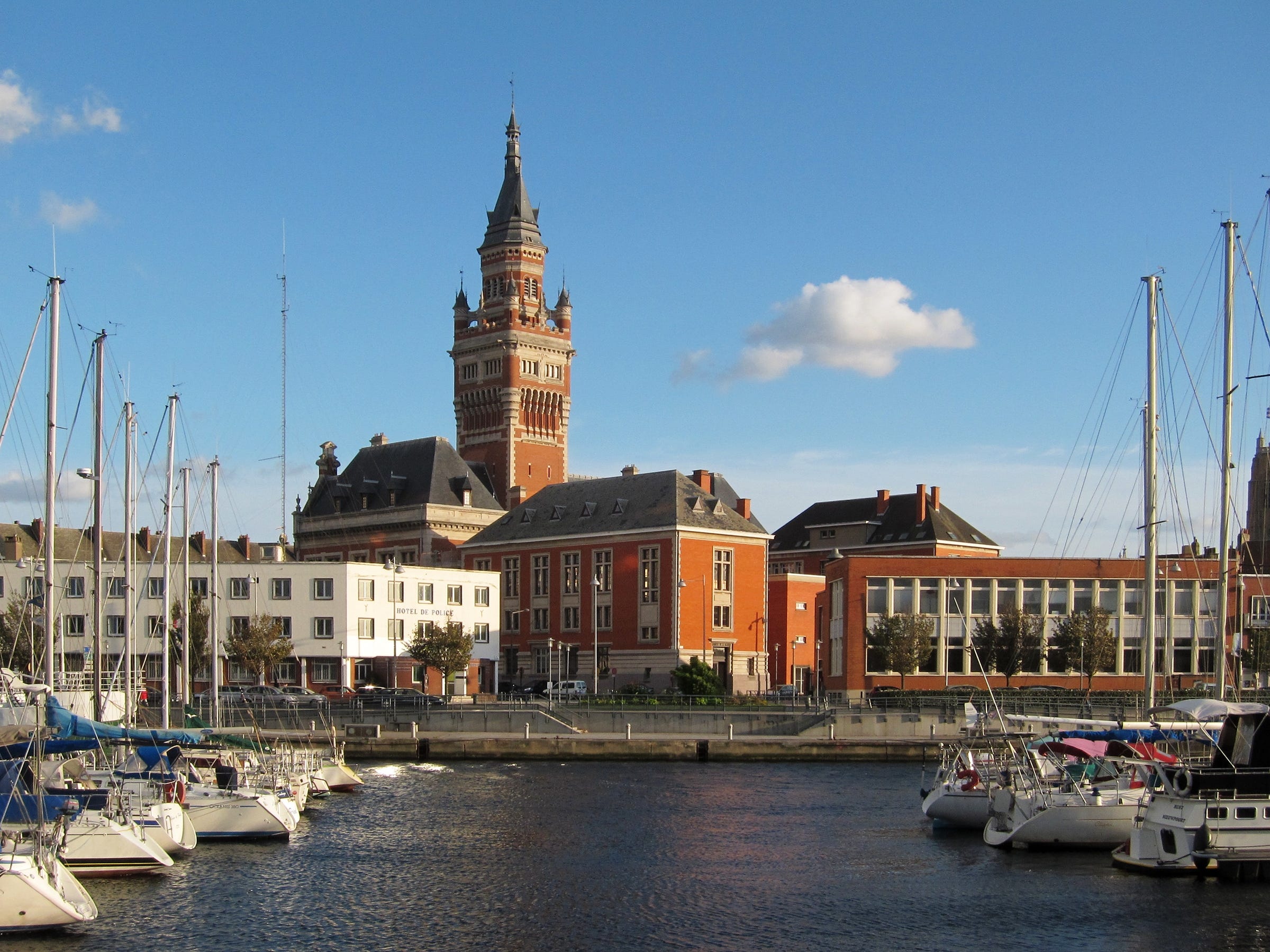

Right, to start the week off: this Thursday, the British far-right were engaged in their typically foolish shenanigans, going to a foreign country and harassing migrants while livestreaming it for the world to see. This led to French police arresting five British men near Dunkirk for what the Nord prefecture describes as intimidation of migrants on the coast.
The officers also found, comme par hasard, four tear gas canisters on the group.
Authorities stated that the far-right militants were arrested for “participating in a group formed to prepare violence against people”, as well as for carrying category D weapons without a legitimate reason, and once released from police custody, they are expected to go into administrative detention pending expulsion from French territory.
The five far-right militants had been touring the coast in a minibus they had christened “the battle bus”, which tells you roughly not only what their plans were, but also how seriously they took the French criminal code.
Paris has spent a shockingly long period of time dealing with violent far-right British visitors across 2026. In mid-January the interior ministry banned ten members of the far-right ‘Raise the Colours’ collective from French territory over the destruction of small boats on the beaches of Nord and Pas-de-Calais, with Laurent Nuñez declaring “our rule of law is non-negotiable”.
The movement was started in the summer of 2025 by Ryan Bridge, a far-right activist from Birmingham, as a campaign to put English flags on lamp posts across the UK, usually accompanied by random clashes with people who told them to stop. Unsurprisingly, it took less than six months to progress from bunting to slashing dinghies in another country they didn’t live in.
A week after the bans, the Nord and Pas-de-Calais prefects banned gatherings across Dunkirk, Calais, Boulogne-sur-Mer, Montreuil-sur-Mer and Lille to head off Operation Overlord, a stop-the-boats mobilisation fronted by Daniel Thomas, once Tommy Robinson’s bodyguard, and named after the Normandy landings with all of the subtlety of a nuclear bomb.
Two men were arrested near Calais that weekend while filming themselves on a beach, and France later sent them home. French prosecutors had already opened an inquiry into aggravated violence against migrants at Grand-Fort-Philippe in September 2025.
The common thread is their obsession with publicising their foolishness.
Each far-right group has gone the extra mile to broadcast its outings live to a British audience that will most likely never set foot in Gravelines, with French sand serving as a film set for content made for England. They even go as far as publicising outright crimes, with aid workers having described supporters releasing dogs on migrants and volunteers, and reports of violence are unsurprisingly not rare in these events.

Luckily, Thursday’s five were picked up mid-broadcast, which at least spared investigators some legwork, despite complaints that they were arrested regardless of their “press badges.”

And as often seems to be the case in these situations, the timing is odd if stopping crossings is the stated goal.
Just over 21,000 people have reached England by small boat so far this year, according to Home Office data, a steep fall from the same period in 2025, a year that ended with around 41,500 arrivals. Weather still decides more than any patrol does: over 930 people crossed on Thursday and Friday alone, and AFP counts at least 24 deaths at sea since January.
What has actually collapsed is the diplomatic framework: the one-in, one-out returns pilot was scrapped on 1 October after Paris declined to renew it and pushed for an EU-wide arrangement instead. Nuñez told deputies it had sent 951 people back to France against 935 admitted to Britain, and Shabana Mahmood conceded that each return cost about £56,000, with scaling up proving “operationally difficult” for a variety of reasons.
Andy Burnham’s government now has no bilateral returns mechanism with France, and Reform UK keeps harvesting the issue regardless of what the numbers do.
Until the end of 2020, a British national on a French beach was an EU citizen, and expelling him meant clearing the bar set by the free movement directive: personal conduct posing a genuine, present and sufficiently serious threat, weighed for proportionality and open to challenge on exactly that ground.
However, post-Brexit, a Briton with no residence rights under the Withdrawal Agreement is a third-country national, and the French toolkit for third-country nationals is administrative and fast. The ten January bans required no conviction, and Thursday’s five may well be back in Kent before any judge rules on the substance of their case. This means Paris can display firmness towards far-right British agitators at zero diplomatic cost, a month after refusing London the returns deal it wanted, and many would argue it desperately needed, and come out on top.
Taking back control, it turns out, works in both directions; and as the situation has continued, so shall it most probably persist:
In January the two men arrested near Calais were held for incitement to hatred, a speech offence built around what they broadcast very publicly over the internet. Ten months later, the five at Dunkirk face accusations of preparing violence in a group and carrying weapons, which places the movement’s conduct in a completely different legal category altogether.
That trajectory matters more for Paris than for London, which will likely divert responsibility away from itself. French police on the Opal Coast already work under a British-funded mandate to stop departures, and they are now also absorbing the cost of British domestic politics arriving by ‘battlebus’ and armed with weapons, with no returns deal left to bargain over.
When the two governments next sit down to negotiate coastal funding, we should expect the French side to put the vigilantes on the bill, and for the British government to be put in the uncomfortable position of apologising and making amends as Brexit continues to make Britain “great”.
📉Fitch keeps A+ rating but loses its patience
Next up, the public finances, which spent the week doing what they do best: getting worse. On Friday evening Fitch held France’s sovereign rating at A+ but moved the outlook from stable to negative, rating-agency shorthand for a next move more likely to be down than up.
What made this one notable is that Fitch didn’t even wait for its own calendar. EU rules oblige agencies to publish sovereign reviews on a pre-announced schedule, and Fitch had to invoke the exemption for a material change in creditworthiness to justify stepping outside it. In August it had kept the outlook stable and still described the French economy as resilient. Two months later it found weaker growth, higher borrowing costs and a wider deficit, all piling onto debt dynamics it already considered weak.
The numbers make for grim reading. Fitch now sees debt climbing from 115.7% of GDP in 2025 to around 124% in 2028, roughly double the median for A-rated sovereigns, and reckons the cumulative adjustment needed to stabilise it has grown from 3% of GDP to 3.5% over a single summer. The government, for its part, has already conceded a 2026 deficit of 5.4% against its 5% target.
The timing was, comme d’habitude, impeccable. That same morning INSEE’s first estimate showed GDP shrinking by 0.1% in the third quarter, after a flat second quarter and a contraction in the first, and Roland Lescure admitted that “the French economy is at a standstill”.
Just three weeks ago, the Banque de France had pencilled in a growth rate of 0.1% for the quarter. France has dodged a technical recession purely because the second quarter came in at zero, a margin INSEE’s downward revisions have been shaving all year. October inflation, for good measure, hit 3.4%, its highest since late 2023.
Bond markets, naturally, got there first. The ten-year OAT (Fungible Treasury Bond) crossed 5% on 21 October, up from 4.1% in Fitch’s August review, and the spread over German Bunds briefly touched 174 basis points. Investors are now demanding a higher return to hold French debt than Italian debt, with the gap reaching a record 30 basis points earlier this month.
To put this in context, in July 2012 during the Eurozone Crisis, Italy was paying over 400 points more than France, and anyone who predicted this reversal at the time would have been politely shown the door.
To add to the fun news, Fitch expects interest payments to rise from 2.5% of GDP in 2025 to 3.3% in 2028, versus a peer median of 1.5%, money that goes to bondholders before a single euro reaches a hospital or a lycée.
Moody’s spared France a week earlier, holding it at Aa3 with a negative outlook instead of cutting, though it warned that fragmentation could “continue to impair the functioning of the country’s legislative institutions”.
Which brings us to the budget.
Left untouched, the government’s own late-September projection put the 2027 deficit at 6.4% of GDP. The draft aims to drag that down to 5% through a €54 billion effort, €43 billion of it in new measures. Fitch calls the plan ambitious, then forecasts 5.5% anyway, citing weaker growth and the concessions it fully expects the Assemblée to extract along the way.
As for getting it through Parliament, Sébastien Lecornu told Le Figaro that “at the end, there will be a vote”, a line he also used last year before forcing the 2026 budget through with three uses of 49.3 that stretched into February. The Parti Socialiste, whose restraint saved him then in exchange for suspending the pension reform, sound far less obliging with the presidential election six months away and a victory to fight for against not only Marine Le Pen, but far-left firebrand Jean-Luc Mélenchon.
One executive source was rather more candid about the government’s thinking: “nobody gives a damn about the parliamentary debates”.
Which is a little bit harsh, but to be entirely honest, mostly accurate. Fitch expects the budget to pass “by constitutional mechanisms”, which is rating-agency-ese for article 49.3 or ordinances, and has priced that in without much fuss. What actually worries the agency is what comes after.
The committee wrote that the emerging presidential debate has done nothing to strengthen its confidence in durable deficit reduction, and it pencils in parliamentary elections as likely on top of the presidential one, so it is already marking manifestos that barely exist.
It also ranks France below the 50th percentile on the World Bank’s political stability indicator, which is not a great look for a country supposed to be a primary driver of the European Union.
The rating’s own arithmetic shows how little cushion is left: Fitch’s model produces A+ by itself; the committee then deducts a notch for debt and the political environment, and adds one back because France came through the pandemic without lasting damage.
Take away a Covid-era adjustment from 2020 and France is an A credit on Fitch’s own scorecard, which means that whoever moves into the Élysée next May inherits a very thin margin, interest costs at more than double the peer median, and a Fitch review due by the end of February that will treat every campaign promise as a line in the debt model.
The candidates have only a few months to get their sums straight, and on current evidence, with Mélenchon calling for us to ignore debt and Le Pen working to upend the budget and abandon our allies, we’re in trouble.
Thank you for reading the French Dispatch! If you liked what you read, you should like this post and subscribe to the newsletter by clicking/tapping the button below:
And if you’d like to contribute a coffee or two to help fuel my coverage of the wild world of politics, feel free to click on the picture below:
