


👋Hey guys, Julien here. The French Dispatch is a reader-supported publication, and both our coverage of current affairs as well as our ability to bring you more news and information on the world around us is entirely funded by paid subscriptions and donations.
If you enjoy reading articles written by high-level experts, then make sure to support the publication by liking, subscribing, and sharing it with your friends and colleagues, and consider taking a paid subscription.

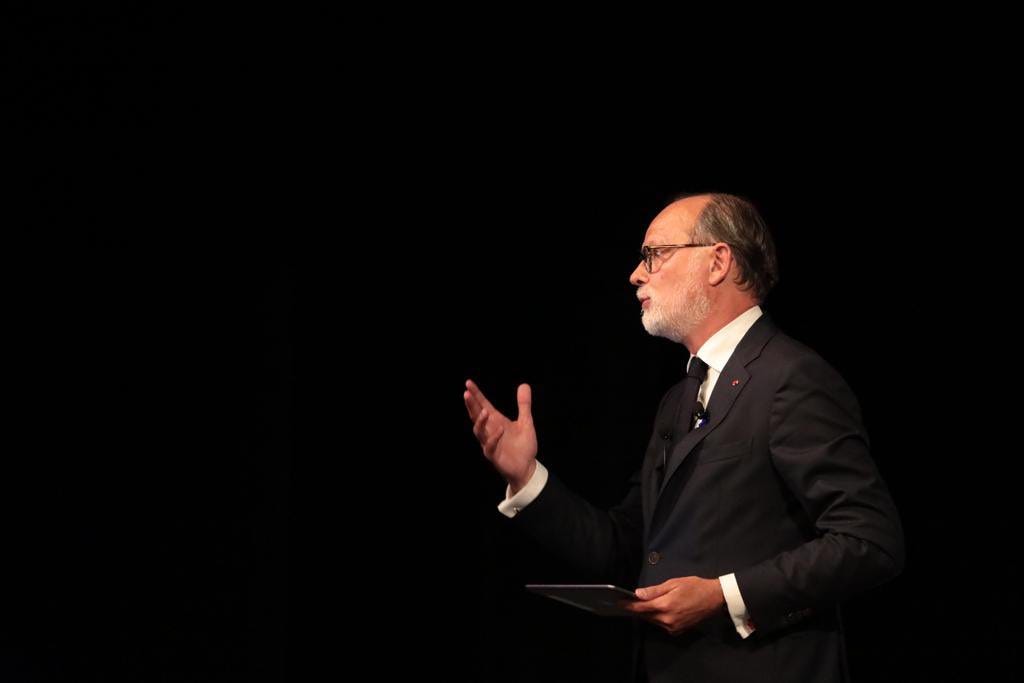
The Parquet national financier confirmed that a formal judicial investigation will be opened against Édouard Philippe, his deputy, Stéphanie de Bazelaire, and the metropole’s director general, Claire-Sophie Tasias. The opening order was signed on 7 May, according to Le Monde’s reporting from yesterday.
An investigating magistrate, a juge d’instruction, now takes over a preliminary inquiry that has been running since 2023, with searches already carried out at the hôtel de ville and the metropolitan offices in April 2024.
The charges are familiar to anyone who has followed the file: misappropriation of public funds, favouritism, illegal taking of interest, concussion (the unlawful collection of sums by a public official), and moral harassment. Philippe’s office told AFP the candidate “takes note” of the procedure and will answer the magistrate’s questions “as he always has, with serenity.” His lawyer, Emmanuel Marsigny, declined to comment.
What is the PNF?
The Parquet national financier was created in 2013, in the wake of the Cahuzac affair, to centralise the prosecution of high-level corruption, tax fraud and financial crime. It opens preliminary inquiries under its own authority and can request the opening of a formal judicial investigation when a complainant files a civil-party suit, or when broader investigative powers are needed.
Control of the file then transfers from the prosecutor to an independent investigating magistrate, who can conduct interrogations, place individuals under formal investigation (mise en examen), and order new investigative acts on his or her own initiative.
The Cité numérique file
The case turns on a multi-year service agreement signed on 30 July 2020. The communauté urbaine, then chaired by Philippe, contracted with the association LH French Tech for €2.154 million. The association was chaired pro bono by de Bazelaire, who also held an elected position as deputy mayor for digital affairs.
The arrangement: a public official negotiating a €2.154 million public subsidy with an association run by another elected member of her own majority. LH French Tech, created in July 2020, was the only candidate to respond to the call for expressions of interest that the metropole itself had launched four months earlier.
The whistleblower, who has used the pseudonym Judith throughout the file, was hired as deputy director general in September 2020, and by the time she started raising internal notes about LH French Tech in late 2021, €1.15 million had already been transferred.
The agreement was cut short in March 2022, the lease at the Cité numérique was terminated three months later, and the association was placed in liquidation in 2023. Her fixed-term contract was not renewed, and she filed a civil-party complaint in June 2025, which eventually led to the case being referred to an investigating magistrate.
She has since obtained whistleblower status from the Défenseur des droits, granted on 21 January 2025 after a two-year adversarial enquiry. The metropole is contesting that decision before the tribunal administratif de Paris, which her counsel describes as a textbook strategic lawsuit designed to silence her (procédure-bâillon, or SLAPP).
